Leadership


Leadership is the way you motivate a group of persons in order to achieve defined targets
- By the ability to inspire others
- By presenting ideas both own and others’
- By respecting and listening to the members of the group
- By giving directions
- By your and the coworkers mutual trust
- By creating an environment where everyone feels respected and trusted

Leadership a multifaceted occupation


A group where everybody is:
-
Seen
-
Listened to
-
Communicating and Communicated to with
-
Respected
-
Supported
-
Cooperating and Cooperated with


Soft Steering with Targets and Values
Cooworkers are humans so when steering them, there needs to be a balance between measurable targets and feelings. Especially when informing about theese targets, you need to make room for soft issues in the communiction when you try to get commitment
Ask:
-
Is the target probable to meet (what is hindering and what is promoting fulfilment)
-
Try to cover information of Way, What and How (to motivate and explain) why it is important that the targets are reached
-
What can I do to do the promote the possibility of target fullfilment
-
Can the coworker commit to the target

High performing team
As a leader you need to work with your coworkers to create High performing team i.e. a group of people with specific roles and complementary talents and skills, aligned with and committed to common targets, who consistently show high levels of cooperation and innovation. All this produce superior results.
Feel, Think and Act
Use both your feelings and your logic to decide the actions to take

If we manipulate or steer in detail people will give you exactly what you pay for

If we inspire , let people take responsibility and make them feel appreciated they will give us more than we ask for

Today we tend to use more remote working force in the working group (Covid and trends in society promote this)
When working remote you need to think of:
-
How and under what circumstances does the group get to know each other and how do you create a High performing team (see: Diversity in the working group)
-
How is cooperation between workers promoted and encouraged to nurse knowledge building
-
How do you establish the sense of urgency in the working group (see: Visualisation and communication)

To be a leader means that you need to live in a constant balancing act
There is no general balance between Heart and Mind, it needs to be found out depending on the need of the leader and of the group
It may vary depending on occasion and with time
The balance needs to be re-evaluated constantly
Prioritise

Time critical
As a leader there is often to much to do, then it is important to prioritise in a structured way
Depending on the importance and the hurry of an activity your responsive action needs to be different
Remember that the relation to coworkers and the your direct manager often fits in the action quadrant
Performance critical

Everyone needs to feel safe (physical, emotional or psychological safety).

Physical
By leveraging data analysis, providing relevant information and facilitating communication, a Safe Workplace can be created and maintained
Several key steps and considerations to create and maintain a physically safe workplace
1.Risk Assessment
2.Safety Training
3.Compliance Assistance (information and instruction display)
4.Incident Reporting
5.Emergency Preparedness
Continuous Improvement

Emotional or psychological safety
It is created through building trust in a working group and it involves a combination of actions, behaviours, and communication that demonstrate:
- Integrity
- Sincerity
- Reliability
- Consistency
- Commitment
- Competence
Here are some ways to create trust:
- Be honest and transparent
- Follow through on commitments
- Demonstrate competence
- Act with integrity
- Listen actively
- Respect others
- Be reliable
- Admit mistakes
- Maintain confidentiality
- Build relationships

Create and promote a positive climate where everyone feels safe, listened to, trusted and seen
– and positive feedback is used a lot
A happy and positive person feeling safe does a better job
Save the negative feedback to the improvement situation when you can look upon it as improvement possibilities
- Bring positive criticism in a group
- Negative criticism face-to-face

As a leader you need to work with your coworkers to create High performing team i.e. a group of people with specific roles and complementary talents and skills, aligned with and committed to common targets, who consistently show high levels of cooperation and innovation. All this produce superior results.
The group has more brains then you - use the total brain resource
In the Heart and Mind Management model there are many components that can help you beeing a good Leader

To start a leadership
Starting a new job is always challenging. In the case of starting a leadership it is quite overwhelming. In the PPP that you can buy there is some advice of where to start

Content
Managers tasks
Help
Tips concerning leadership
Decision-making
Leadership buzzwords
Leadership style and AI
Core Human Values

Managers tasks
Important components in a leadership
Leadership topics
1. Self-Awareness
2. Clear Vision & Direction
3. Communication Skills
4. Emotional Intelligence
5. Integrity & Ethics
6. Decision-Making Ability
7. Accountability
8. Ability to Inspire & Motivate
9. Adaptability & Continuous Learning
10. Empowerment & Delegation
11. Credibility & Competence
To enhance leadership: build trust, communicate clearly, grow people, and keep learning


1. Self-Awareness
knowing your emotions, behaviour, values, strengths, and impact
To enhance leadership: build trust, communicate clearly, grow people, and keep learning.

2. Clear Vision & Direction
- Clarity – vision is easy to understand
- Purpose – explains why it matters
- Future focus – shows where to go
- Alignment – matches goals and values
- Achievability – realistic and motivating
- Priorities – shows what is important
- Communication – shared clearly and often
- Measurability – progress can be checked
- Flexibility – adapts to change

3. Communication Skills
Main Areas are:
- Verbal Communication – speaking clearly and effectively
- Non-Verbal Communication – body language, facial expressions, tone
- Listening Skills – active and attentive
- Written Communication – clear and structured writing
- Clarity & Simplicity – easy-to-understand messages
- Emotional Awareness – understanding feelings in communication
- Feedback Skills – giving and receiving feedback
- Questioning Skills – asking the right questions
- Confidence – speaking with assurance
- Adaptability – adjusting style to audience and situation

4. Emotional Intelligence
Most Important Points in Emotional Intelligence
- Self-awareness – understanding your own emotions
- Self-control – managing emotions effectively
- Empathy – understanding others’ feelings
- Motivation – using emotions to achieve goals
- Social awareness – understanding social situations
- Relationship – handling relationships well management
- Emotional regulation – staying calm under pressure
- Positive attitude – maintaining optimism

5. Integrity & Ethics
Important Points are:
- Honesty – being truthful in words and actions
- Fairness – treating everyone equally
- Responsibility – owning actions and decisions
- Consistency – acting the same in all situations
- Transparency – being open and clear
- Respect – valuing others
- Accountability – accepting consequences
- Moral values – knowing right from wrong
- Trustworthiness – keeping promises

6. Decision-Making Ability
- Problem identification – understanding the issue clearly
- Information gathering – collecting relevant facts
- Option analysis – comparing possible choices
- Logical thinking – using reasoning and judgment
- Risk assessment – considering possible consequences
- Ethical judgment – choosing what is right and fair
- Timeliness – making decisions at the right time
- Confidence – committing to the decision
- Accountability – taking responsibility for outcomes

7. Accountability
- Set clear goals – define what must be done
- Define roles – know who is responsible
- Take ownership – accept responsibility for actions
- Follow through – complete tasks on time
- Measure – track progress and results/Performance
- Be honest – admit mistakes and correct them
- Give feedback – review performance regularly
- Apply fair – reward success, failure correct consequences
- Lead by example– show example accountability yourself

8. Ability to Inspire & Motivate
- Communicate purpose – explain why work matters
- Lead by example – show commitment and passion
- Encourage others – give support and confidence
- Recognise achievements – appreciate effort and success
- Build trust – be honest and reliable
- Set clear goals – give direction and focus
- Stay positive – show optimism during challenges
- Empower people – give responsibility and trust
- Listen actively – value others’ ideas and concerns

9. Adaptability & Continuous Learning
1.Encourage a growth mindset
2.Support ongoing training
3.Create a safe environment
4.Lead by example
5.Encourage innovation
6.Stay open to change
Adaptability and continuous learning are created by encouraging growth, supporting development, leading by example, and building a safe and open work culture.
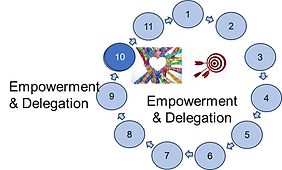
10. Empowerment & Delegation
- Build trust – believe in people’s abilities
- Define tasks clearly – explain goals and expectations
- Match task to person – choose the right person for the
job
- Give authority – allow people to make decisions
- Provide support – give resources and guidance
- Avoid micromanaging – let people work independently
- Set deadlines – clarify time and priorities
- Monitor progress – check results regularly
- Give feedback – praise success and correct
mistakes
- Encourage learning – help people grow and develop
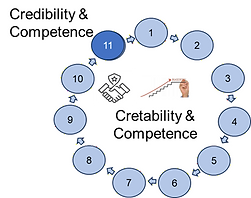
11. Credibility & Competence
- Develop knowledge – learn continuously
- Be honest – speak truthfully and clearly
- Keep promises – do what you say
- Deliver results – meet goals and expectations
- Act with integrity – do the right thing always
- Be consistent – same behaviour in all situations
- Accept responsibility – own decisions and outcomes
- Seek feedback – learn and improve
-Respect others’ – value team expertise knowledge
- Stay calm under – show confidence
pressure
Content
Managers tasks
Help
Tips concerning leadership
Decision-making
Leadership buzzwords
Leadership style and AI
Core Human Values


Help

Dependence of alcohol, pills, drugs, gaming and mental ill-health
The following needs to be done:
- Create a policy regarding these problems
- Inform coworkers of the policy
- Depending on the problems you face, you might need:
- Define dangerous use
- Investigation and assessment
- Motivational treatment
- Motivational talks
- Addiction treatment

Exhaustion/problems with the mental health, an increasing problem in society
Sometimes the this is caused by performance based self esteem
•You often compare yourself to others
•You value yourself according to your achievements.
•You don’t allow yourself not to achieve the best all the time
•You don’t rest even if you are tired
You feel useless if you fail with a task

Solution focused conversations
is an approach to communication and problem-solving that focuses on identifying and implementing solutions rather than dwelling on problems.
1.Together create a preferred picture of how the coworker wants the future
to look like.
2.Strengths and Resources: Discuss together things that the coworker does
already today and works well.
3.Positive Language: What is working well today? Don’t focus on the
problems
4.Goal Setting: Setting clear and achivable targets together so that
individuals can work towards positive outcomes
5.Small Steps and Progress: Breaking down larger challenges into smaller,
more manageable steps, celebrating and acknowledging even small
progress is encouraged to build momentum.
6.Collaboration: Between the coaching person and the coach
7.Acceptance: Are you understanding and accepting the problem?
8.Brief and Time-Limited: The goal is to bring about positive change in a
relatively short period.
The International Journal of Solution Focused Brief Practices” an open source. link:

Dependence - ask for help
When different kinds of dependencies occur, don’t be afraid to ask experts for advice. It is important that leaders are involved, but there might be someone that can support or assist you in your role as a leader
Content
Managers tasks
Help
Tips concerning leadership
Decision-making
Leadership buzzwords
Leadership style and AI
Core Human Values
Tips concerning leadership
Impotent in a leadership are to:
- To listen
- See for yourself
- Reflect
- Respect
- Communicate
- Be Clear
- Cooperate
- Be there when you are needed
- Support
- Act as a Sounding Board
- Change improve and develop
- Flow
- Be flexibel
- Vision & Direction
- Credibility & Competence
- Accountability


- To listen
- Leadership is not being the best, it is about making everyone better, to
create a climate where everyone can contribute in their best way all the
time whether you are there or not.
- Treat everyone with respect, courtesy, politeness and kindness.
- Listen to what others have to say before expressing your viewpoint. Never
interrupt. Use the coworkers’ ideas to create change and improvements.
- Treat people with respect, do not insult.
- Give positive feedback a lot more than negative feedback.
- Respect employee’s personal time. Avoid calling them after work hours or
constantly expecting them to work late.
- Show interest in their professional and personal development.
Turn the hierarchy upside down. As a manager your main target is to make everyone do their best


- See for yourself
- Check or experience something on your own
- Do not rely only on what others say
- Form your own understanding or opinion
It encourages a person to:
- Observe directly
- Judge independently
- Learn through personal experience

To Reflect
Why Reflection Is So Important
- Improves self-awareness – understand your thoughts and actions
- Helps learning – learn from successes and mistakes
- Improves decision-making – make better choices next time
- Encourages growth – supports personal and professional
development
- Corrects mistakes – identify what went wrong and fix it
- Builds confidence – understand what you do well
- Reduces repeated errors – avoid making the same mistakes again
- Improves leadership skills – become more effective over time

To Respect
- Improves self-awareness – understand your thoughts and actions
- Helps learning – learn from successes and mistakes
- Improves decision-making – make better choices next time
- Encourages growth – supports personal and professional
development
- Corrects mistakes – identify what went wrong and fix it
- Builds confidence – understand what you do well
- Reduces repeated errors – avoid making the same mistakes again
- Improves leadership skills – become more effective over time

Communicate
Why Communication Is So Important:
- Shares information clearly – avoids confusion
- Builds trust – people feel connected and
respected
- Improves teamwork – helps people work together
- Supports decision-making – better understanding leads to
better choices
- Reduces conflict – misunderstandings are avoided
- Motivates people – clear messages encourage action
- Improves relationships – strengthens cooperation
- Helps leadership – leaders guide and influence
others

Promote an open discussion climate where everybody is encouraged to present their ideas (if you havent heard an idea how can you judge if it is good one or not)
It is important to take good care of all ideas regardless of who presents them
Remember you have one brain and the group have several brains

To Be Clear
Why It Is So Important to Be Clear
- Avoids confusion – messages are understood correctly
- Prevents mistakes – people know exactly what to do
- Saves time – fewer questions and corrections
- Improves communication – ideas are shared effectively
- Builds trust – clarity shows honesty and
confidence
- Improves decision-making – clear information leads to better
choices
- Supports teamwork – everyone works toward the same
goal

Cooperate
Cooperation is important because it helps people work together to achieve common goals, solve problems more effectively, and build stronger relationships. When people cooperate, they can combine their strengths, share resources, and create better outcomes than if they worked alone.

- When you’re there for someone:
- It shows you care, not just with words but with actions
- It builds trust, so people know they’re not alone
- It helps others feel safe and supported, especially during hard moments
- It strengthens friendships, families, and teams
Support
When you support someone:
- It gives them strength and confidence
- It shows kindness and care, which builds trust
- It helps people get through difficult times
- It encourages them to keep trying and not give up
Support can be as simple as listening, helping, or just being there—and it can make a big difference in someone’s life
Act as a Sounding Board
When you act as a sounding board:
- You help people sort out their thoughts and feelings
- You show that you’re listening without judging
- It can help them solve problems or make better decisions
- It makes them feel supported and understood, not alone
Sometimes people don’t need advice—they just need someone to listen

Change, improve and develop
When you change, improve and develop:
- You learn new skills and gain knowledge
- You become better at handling challenges
- You can reach goals and create new opportunities
- You adapt to life instead of staying stuck
Growth helps you move forward and succeed in life

Flow
When there is flow:
- Work gets done more easily and efficiently
- People understand what to do and when to do it
- There is less stress, confusion, and conflict
- Goals are reached faster and better
Flow helps everything move forward without problems—like water flowing smoothly instead of getting stuck

Be flexible
When you are flexible:
- You can adapt to new situations
- You handle problems and surprises better
- You work well with different people and ideas
- You feel less stressed when plans change
Being flexible helps you keep moving forward instead of getting stuck

Vision & Direction
When there is clear vision and direction:
- People know where they are going and why
- Decisions become easier and more focused
- Teams stay motivated and aligned
- Efforts are not wasted or confused
- Vision shows the future, and direction shows the path to get there

Credibility & Competence
When a leader has credibility and competence:
- People trust their decisions and judgment
- They feel safe following their guidance
- Respect for the leader grows naturally
- Work is done more effectively and professionally
- Without credibility and competence, it’s hard to lead others successfully

Accountabilit
Accountability matters because it’s basically how trust, growth, and progress happen.
- Builds trust
When people take responsibility for their actions, others know they can
rely on them.Trust doesn’t survive without accountability.
- Encourages honesty
Owning mistakes (instead of blaming others) creates a culture where
people tell the truth and learn.
- Helps people grow
If you’re accountable, you reflect on what went wrong and what went
right. That’s how improvement happens—in school, work, and life.
- Creates fairness
Accountability makes sure rules apply to everyone, not just some people.
That keeps things balanced and just.
- Improves results
When people know they’re responsible for outcomes, they’re more
motivated to put in real effort and follow through.
- Strengthens character
Taking responsibility shows maturity, integrity, and self-respect. People
notice that.
In short: no accountability = chaos, excuses, and broken trust.
With accountability, things actually move forward
Tips concerning leadership
Impotent in a leadership are to:
- To listen
- See for yourself
- Reflect
- Respect
- Communicate
- Be Clear
- Cooperate
- Be there when you are needed
- Support
- Act as a Sounding Board
- Change improve and develop
- Flow
- Be flexibel
- Vision & Direction
- Credibility & Competence
- Accountability
Content
Managers tasks
Help
Tips concerning leadership
Decision-making
Leadership buzzwords
Leadership style and AI
Core Human Values

Decision-making

The Leadership has evolved depending on the needs in the society we live in
I have got the insperation to this chapture from Reference: Laloux Culture Model and Agile, but not fully followed their model
5
-
Anti fragile organisations
-
Higher purpose
-
Distributed Decision making (After checking everyones opinion not consensus)
-
Use the complete person
-
Self Management
-
Evolving Purpose
4 Information society
-
Everyone has a computer
-
Google
-
Everyone has information
-
Shared values
-
Engagement
-
Stakeholders (internal and external) balacing
-
Culture over strategy
-
Empowerment
-
AGILE
-
LEAN
3 Industrial socity
-
Competition
-
Profit
-
Innovations
-
Accountability
-
Meritocracy
2 Farmer Society
-
Hierarchy
-
Stability
-
Control
-
Processes
-
Formal roles
-
Vicar
-
School teacher
-
-
Long term perspective
1 Hunter society
-
Survive Chaos
-
Power
-
Dictator
-
Fear
-
Strong Leader
-
Command authority

Using the Diversity Development presented in Development, is an increased responsibility for the individuals meaning that there needs to be room for them to take a bigger responsibility (a level 4 or 5 in the model)
Using the Diversity Development presented in Development, is an increased responsibility for the individuals meaning that there needs to be room for them to take a bigger responsibility (a level 4 or 5 in the model)
Content
Managers tasks
Help
Tips concerning leadership
Decision-making
Leadership buzzwords
Leadership style and AI
Core Human Values

High‑Impact Leadership Buzzwords
1.Servant Leadership — Leading by empowering others rather than commanding.
2.Transformational Leadership — Inspiring big change through vision and motivation.
3.Adaptive Leadership — Navigating uncertainty with flexibility and resilience.
4.Emotional Intelligence (EQ) — Understanding and managing emotions to lead effectively.
5.Psychological Safety — Creating an environment where people feel safe to speak up.
6.Growth Mindset — Believing skills can be developed and encouraging continuous learning.
7.Strategic Agility — Pivoting quickly without losing sight of long‑term goals.
Inclusive Leadership — Ensuring diverse voices are heard and valued
8.Inclusive Leadership — Ensuring diverse voices are heard and valued.
9.Data‑Driven Decision Making — Using evidence, not gut feelings, to guide choices.
10.Empowerment Culture — Giving teams autonomy and ownership.
11.Change Champion — Actively driving and supporting organizational change.
12.Vision Alignment — Ensuring everyone understands and supports the mission.
13.Cross‑Functional Collaboration — Breaking silos and working across teams.
14.Accountability Framework — Clear expectations and follow‑through
15.Human‑Centered Leadership — Prioritizing well‑being, empathy, and connection.
New‑Era Buzzwords
1.Quiet Leadership — Leading through calm influence rather than loud authority.
2.Authentic Leadership — Being transparent, real, and values‑driven.
3.Digital Fluency — Understanding and leveraging modern tech.
4.Future‑Ready Mindset — Preparing teams for what’s next, not just what’s now.
5.Culture Architect — Leaders who intentionally shape team culture.
6.Purpose‑Driven Leadership — Anchoring decisions in mission and meaning.
7.Resonant Leadership — Creating emotional harmony and positive energy.
8.Micro‑Coaching — Small, frequent feedback moments instead of annual reviews.

Content
Managers tasks
Help
Tips concerning leadership
Decision-making
Leadership buzzwords
Leadership style and AI
Core Human Values


Leadership style and AI
Leading in an AI environment
Before, leaders were expected to have answers.
With AI, strong leaders focus more on framing the right questions, checking assumptions, and interpreting results
1.More data-driven, less gut-only
- balancing data with human judgment
2. Faster decisions, shorter cycle
AI speeds up analysis so that:
- decisions are made quicker
- adjust strategies are done more often
- lead in real time, not yearly plans
That means being more agile and comfortable with change.
3. Stronger focus on ethics and responsibility
- setting ethical boundaries
- ensuring accountability
- protecting human values
4. Stronger focus on ethics and responsibility
- setting ethical boundaries
- ensuring accountability
- protecting human values
5. Skills become more important
- Judging wether information is trustworthy
- Communication skills
- Emotional intelligence

When not to use AI
When not to use AI:
1. When human judgment is critical
- Ethical decisions
- Life-changing choices (medical, legal, disciplina)
- AI can support, but humans must decide.
2. When empathy and emotional understanding matter
- Conflict resolution
- Counseling or therapy
- Sensitive feedback (layoffs, personal crises)
AI can’t genuinely understand emotions or build trust.
3. When data is poor, biased, or missing
- Small datasets
- Biased historical data
- New or unique situations
- In new innovations
Bad data → bad AI decisions.
4. When transparency is required
- Legal decisions
- Government or regulatory contexts
-High-risk accountability situations
If you can’t explain why a decision was made, AI may not be appropriate.
5. When creativity must be original or deeply human
- Core artistic vision
- Personal storytelling
-Cultural or moral expression
AI can help, but relying on it too much can reduce authenticity.
6. When privacy or security is at risk
- Sensitive personal data
- Confidential business information
- National security contexts
AI use here requires strict controls — or no use at all.
7. When speed is less important than reflection
- Long-term strategy
- Value-based leadership decisions
- Complex social issues
Fast answers aren’t always the right ones.
be appropriate.
Use AI as a tool, not a replacement for responsibility, empathy, ethics, or wisdom.
Power/information becomes more distributed using AI
Meaning that leadeship becomes a more adaptive, ethical, people-centered leadership
-
Content
Managers tasks
Help
Tips concerning leadership
Decision-making
Leadership buzzwords
Leadership style and AI
Core Human Values

Core Human Values
As a Leader and as a coworker you need to act according to the Core Human Values
1. Respect
2. Empathy
3. Integrity
4. Kindness
5. Responsibility
6. Equality
7. Gratitude
8. Courage
9. Humility
10. Compassion


Reference
-
The Puzzel of Motivation, Dan Pink Ted Talk https://www.ted.com/talks/dan_pink_the_puzzle_of_motivation
-
How great leaders inspire action, Simon Sinek Ted Talk
https://www.ted.com/talks/simon_sinek_how_great_leaders_inspire_action?referrer=playlist-the_most_popular_talks_of_all -
Why great leaders take humor seriously | Jennifer Aaker and Naomi Bagdonas | TED TALK DAILY - Bing video
-
A guide to collaborate leadership, Lorna Davis https://www.bing.com/videos/search?q=ted+talks+lorna+davis&&view=detail&mid=F52DB9A715CAC6ECA034F52DB9A715CAC6ECA034&&FORM=VRDGAR&ru=%2Fvideos%2Fsearch%3Fq%3Dted%2520talks%2520lorna%2520davis%26qs%3Dn%26form%3DQBVDMH%26sp%3D-1%26pq%3Dted%2520talks%2520lorna%2520davis%26sc%3D0-21%26sk%3D%26cvid%3D37F7F83C2B204C6EB5925FE807E4F458
-
The crises of leadership -- and a new way forward, Halla Tomasdottir Bryn Freedman https://www.ted.com/talks/halla_tomasdottir_and_bryn_freedman_the_crisis_of_leadership_and_a_new_way_forward
-
What it takes to be a great leader, Rosalinde Torres https://www.bing.com/newtabredir?url=https%3A%2F%2Fwww.ted.com%2Ftalks%2Froselinde_torres_what_it_takes_to_be_a_great_leader
-
https://www.agile-academy.com/en/organizational-development/agile-entwicklung-tesla-joe-justice/
-
TEDxToronto - Drew Dudley "Leading with Lollipops"
-
Christine Porath: Why being respectful to your coworkers is good for business | TED Talk
-
Frances Frei: How to build (and rebuild) trust | TED Talk
-
https://www.ted.com/talks/gitte_frederiksen_great_leadership_is_a_network_not_a_hierarchy
Presentation of Leadership. The corresponding PPP is for sale. The development of targets is explained
Menues


Main Menu
Building Block Menu

Training Menu


Assessment Menu
Company Philosophy Menu
Coaching Menu


Workshop Menu

SPOTLIGHT / Focus on Heart and Mind menu


A Human Centered Organisation
Core Human Values
Moral Ambition