Company Philosophy Model

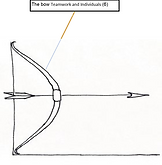
Running a company or an organisation can be compared to Archery you need to stand on a solid ground, everything needs to work well together and in both cases you go for meeting your targets

My Model

My model reminds of other models existing out there
If you look at different models used by different companies they have some principles in common:
-
The company is looked upon as a unit meaning that the model mirrors the whole company, that everything needs to work together and focus is put on the things not working
-
A bridge on pillars, where all the pillars need to be there to successfully carry the road
-
A temple where all the pillars are needed to support the roof
-
A triangle where all the parts work together to support the customer
-
All of them have the customer on top and in focus
-
All of them have the values as a foundation

What are the common principles of different quality models?
1.Customer focus
2.Continuous improvement
3.Leadership & commitment
4.Process approach
5.Evidence-based decisions
6.Employee involvement
7.Relationship management
Most quality models focus on customers, continuous improvement, structured processes, and involving people across the organization.

The model I am using
- My take on this is that the company is a unitwhere everything needs to work
together
- Change and values (the human)
- Synchronisation and Timing (the string)
- Teamwork and Individuals (the bow)
- Process (the arrow)
- Customer Expectation (the angel)
- Quality (the foundation)
- I have the customer (as the target)

The Human
Brain and Gut Feeling => Change and Values

The brain => Change Management and Adjustment (2)
- Operational Development
- Problem Solving Methodologies
- Innovation Management
Gut feeling => Values (3)
- Quality Culture
- Leadership
- Self Leadership
The numbers in brackets refer to the common principles

The string =>Synchronisation and Timing (5,7)
- Project Portfolio Management
- Development
- Waterfall Project
- Iterative development
- Diversified Development
- Service/Fault tree
- Ensured start of production
The bow => Teamwork and Individuals (6)
- Organisational Design
- Resource Flexibility
- Competence Management
- Goal Oriented Team
- Cross-Functional Work
The arrow => Process (4)
- Process Simplicity
- Extended Value chain
- Knowledge
The numbers in brackets refer to the common principles
Customer

The Target board => Customer Expectation (1)
- Customer needs
- Targets
The numbers in brackets refer to the common principles

The Foundation => Quality (5)

The Human Change Management and Adjustment (2)
Maneuverability
This concept is vital for organisations operating in fast-paced or unpredictable industries, where they need strategic shift or adjustment, to innovate and re-align resources effectively to stay competitive.
Here’s a breakdown of key elements contributing to organisational maneuverability:
1.Structural Agility
2. Decision-Making Speed
3. Innovation and Learning Culture
4. Responsive Strategy and Vision
5. Effective Communication Channels

The Human Change Management and Adjustment (2)

Problem Solving Methodologies
- Concentrate on solving reoccurring root causes rather than solving just
symptoms
- Do not ignore the importance of treating symptoms for short term relief
- There can be, and are, often more than one root cause
- Analyse using the 5 W and H method (Ask Who?, What?, Where?, When?,
Why? And How? Did the problem show up?)
- Be systematic and look for evidence to back up the found root cause
- Try to find a way to solve the root cause to prevent it from appearing again
When performing a Root cause analysis it is important to take a comprehensive and holistic approach and to use all the knowledge available in the entire organisation (Cross functional)
The Human Change Management and Adjustment (2)

Innovation Management
Is a new idea, for instance a product, solution, business idea, service, chemical formula, material, mathematical methododology, technical solution that shows itself promising to, or does, work. It fullfills a need or a demand.
It is not previously known, publicly
The Human Change Management and Adjustment (2)

Quality Culture
Quality culture means that everyone in the organisation cares about quality and works to maintain and improve it. It is not just about rules—it is about mindset and behavior.
The Human Change Management and Adjustment (2)

Leadership
Leadership is the way you motivate a group of persons in order to achieve defined targets
- By the ability to inspire others
- By presenting ideas both own and others’
- By respecting and listening to the members of the group
- By giving directions
- By your and the coworkers mutual trust
- By creating an environment where everyone feels respected and trusted
The Human Change Management and Adjustment (2)

Self Leadership
What are the ways for the individuals to act in a self-steering team?
1.Take responsibility
2.Communicate openly
3.Support your teammates
4.Give and receive feedback
5.Stay accountable
6.Be flexible
7.Focus on team goals
In a self-steering team, you act responsibly, communicate clearly, support others, and focus on shared goals.
The String Synchronisation and Timing (5,7)


Project Portfolio Management
is the process of selecting, prioritizing, and managing a group of projects so they align with an organization’s goals and use resources effectively.
The String Synchronisation and Timing (5,7)

Development
General Challenges
- Make use of all the knowledge inside (cross functional) and outside the
company (e.g. suppliers, research, competitors)
- Make sure that everyone understand their role and importance in how
development is done
- Perform activities to mitigate risks (Finance, Quality, Functionality, Requirement
and Components)
Can be done in different ways:
- Waterfall development (usually performed in Projects)
- Iterative development (usually performed in Projects)
- AGILE development (used a lot in Software creation)
- Diversified Development (performed in daily work) The trend in the industry
seems to go this way
In this document I will describe on a high level how theese four are performed
The String Synchronisation and Timing (5,7)

Waterfall Development Project
- The basic thinking around a Waterfall project is to have a
checklist of things needed to be handled before each gate (step
in the process).
- The steering committee controles that the checklist is performed
and approves deviations to the checklist if needed.
- Development is performed simultaneously to all functions and
parts of the project.
- The activities in the checklist can be very detailed meaning that
this way of steering is quite detailed
The String Synchronisation and Timing (5,7)

Iterative development Project
Iterative Development Model
Functionality or components are gradually developed through several loops/cycles. Each loop or cycle results in a more complete version of the product, gradually converging to the final product. This approach emphasises adaptability and the early delivery of a working product.
The String Synchronisation and Timing (5,7)

Diversified Development
Instead of running projects, the trend in the industry is to use the Diversified Development
If the evaluation is done efficiently you can start producing after one loop, of course depending on your production.
This way to work everyday where no project leader is appointed, is a very efficient and fast way of working
The String Synchronisation and Timing (5,7)

Service/Fault tree
- A service tree maps how a service is built and depends on other components.
- A fault tree is a top-down logic diagram that starts with a problem (failure event)
and breaks it down into possible causes.
The String Synchronisation and Timing (5,7)
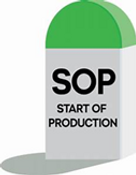
Ensured start of production
- Is a concurrent and cross-functional approach to secure a smooth and
quality-ensured industrialisation ramp up. An important milestone in a project.
- Different companies start production in different ways depending on the product,
but it usually includes planning, testing, validation, and then scaling up to full
production.
- The common target is to minimise the problems during Start of production and
give time to correct ocurring problems

The Bow Teamwork and Individuals (6)

Organisational Design
Organisational Design is a step by step method identifying disfunctional aspects in the workflow, processes, structures and systems, adjusting them to fit present business reality
The Bow Teamwork and Individuals (6)

Resource Flexibility
Flexibility means an ability by persons, machines and organisations to adapt to changed conditions for the business
When I talk of Resource Flexibility, I concentrate on persons, machines and organisations and how they are used in a situation where
The Bow Teamwork and Individuals (6)
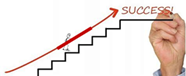
Competence Management
To work with Competence Management, an organization ensures that employees have the right skills, knowledge, and abilities to perform their work and support the company’s goals.
1.Identify what Specific skills need to be improved
2.Assess Existing Competencies
3.Analyse Gaps
4.Plan and Develop
5.Apply and Monitor
6.Evaluate and Improve
The Bow Teamwork and Individuals (6)

Goal Oriented Team
What are the benefits of Goal-Oriented Teams
Clear direction
Higher motivation
Better teamwork
Improved productivity
Stronger accountability
Easier performance measurement
Goal-oriented teams work more efficiently because they have clear direction, shared responsibility, and a strong focus on results.

The Bow Teamwork and Individuals (6)
Cross-Functional Work
Cross-functional work refers to collaboration among people from different departments, disciplines, or areas of expertise within an organization to achieve a common goal, using all the knowledge, skills, and perspectives that each person brings
The Arow Process (4)

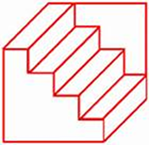
Process Simplicity
What is the beneffit in Process Simplicity:
1.Easier to understand
2.Faster work
3.Fewer mistakes
4.Better efficiency
5.Easier training
6.Better communication
7.Easier improvement
A simple process improves understanding, efficiency, speed, and reduces mistakes.
The Arow Process (4)

Extended Value chain
Extended Value Chain advocates to use the different knowledges even if the knowledge is not located inside your company
The Arow Process (4)

Knowledge
Knowledge has two forms
Explicit knowledge
- What you see
- Based on academic accomplishments
- Easy to bring over to someone else
Tacid Knowledge
- Best Practice
- Lessons Learned
- Gut feeling
The Angel Customer Expectation (1)


Customer needs
What the customers use or their expectation on the product or service
The Angel Customer Expectation (1)

Targets
SMART Targets
S – Specific: The target must be clear and well-defined, answering
what,why, and how.
M – Measurable: It should include criteria to measure progress and
success (e.g. numbers, percentages, milestones).
A – Achievable (or Attainable):
The target should be realistic and possible to
accomplish with available resources.
R – Relevant: The target must align with broader objectives, ensuring
it matters to the business, project, or individual.
T – Time-bound: It must have a deadline or timeframe for completion.
The Foundation Quality (5)


Watherfall Project Quality
How is Quality worked into the Project
1.Invest in Quality assurance in a reasonable way
2.Plan for Quality
3.Start your project with focus and commitment to Quality
4.Perform suitable Calculation and Tests
5.Safeguard the time for testing
6.Agree on quality level with Steering group/Sponsor
The Foundation Quality (5)

Product Quality
What is Quality ?
The ability of the product to satisfy intended need
Maximal effectiveness and usability
Created products with good material and design
- Ensured production environment that suits the product
- The product given a reasonable price – good value for money
- Understanding the customer and fullfilling all their needs and
wishes
- Frequent product updates according to feedback from the
customer
- Introducing the product to the market timely (when the market
is ready to receive it)
Product with an environmental advantage
The Foundation Quality (5)

Process Quality
Process Quality refers to the capability of a process to consistently produce output that meets specifications. It involves monitoring, measuring, and improving processes to ensure they deliver value with minimal variation and waste.
This concept is essential in quality management systems like Total Quality Management (TQM) or Six Sigma, where the focus is on process improvement to ensure product and service quality. Key aspects include:
Consistency in outcomes
Efficiency in resource use
Compliance with standards
Continuous improvement
The Model
Presentation of the Model. The corresponding PPP is for sale. There the references to other models used are shown.
Menues


Main Menu
Building Block Menu

Training Menu


Assessment Menu
Company Philosophy Menu
Coaching Menu


Workshop Menu

SPOTLIGHT / Focus on Heart and Mind menu


A Human Centered Organisation
Core Human Values
Moral Ambition