When you think of the Environment and your product or service, there are many perspectives you need to think about:
- Key Environmental Principles
- Life Cycle Assessment
- Eco Friendly (is a part of Life Cycle Assessment )


The Key Environmental Principles are:
1.Sustainability
2.Precautionary Principle
3.Polluter Pays Principle
4.Conservation of Biodiversity
5.Interconnectedness
6.Public Participation
7.Adaptive Management

1.Sustainability
Ensuring that natural resources are used in a way that meets present needs without compromising the ability of future generations to meet their own needs.

2.Precautionary Principle
Taking preventive action in the face of uncertainty. When an activity raises threats of harm to the environment or human health, precautionary measures should be taken even if some cause-and-effect relationships are not fully established scientifically.

3.Polluter Pays Principle
The party responsible for producing pollution is responsible for paying for the damage done to the natural environment.

4.Conservation of Biodiversity
Protecting and managing the diversity of species, ecosystems, and genetic variations within species.

5.Interconnectedness
Recognising that all components of the environment are interrelated and that changes in one part can have significant impacts on other parts.

6.Public Participation
Involving the public in discussions before decision-making processes regarding environmental issues, to ensure that a diverse range of perspectives and values are considered.

7.Adaptive Management
Implementing management strategies that are flexible and can be adjusted in response to new information and changing conditions.
The Key Environmental Principles are:
1.Sustainability
2.Precautionary Principle
3.Polluter Pays Principle
4.Conservation of Biodiversity
5.Interconnectedness
6.Public Participation
7.Adaptive Management


Life Cycle Assessment
A Way to analyse the total environment impact of a product or service throughout its lifespan
1.Conception and Design
2.Raw Material Extraction
3.Manufacturing and Production
4.Distribution and Logistics
5.Marketing and Sales
6.Usage and Maintenance, End-of-Life (EOL) Management
I found two different checklists. The main aim is to reflect on the different aspects of the full life cycle
A Way to analyse the total environment impact of a product or service throughout its lifespan
1.Goal and Scope Definition
2.Inventory Analysis
3.Usage and Maintenance, End-of-Life (EOL) Management
4.Impact Assessment
5.Interpretation
6.Reporting

1.Goal and Scope Definition
Objective:
Define the purpose of the LCA study.
What specific environmental impacts are you interested in (e.g., carbon footprint, water usage)?
Scope:
Determine the boundaries of the assessment (cradle-to-grave, cradle-to-gate, etc.). Specify the functional unit, which is a measure of the function of the studied system (e.g., 1 kg of product, 1 unit of service).

2.Inventory Analysis
Data Collection:
- Gather data on all inputs and outputs associated with the
product's lifecycle stages:
Discovery and development introduction:
Raw Materials:
- Extraction and processing of raw materials.
Manufacturing:
- Energy use, emissions and waste from
production processes.
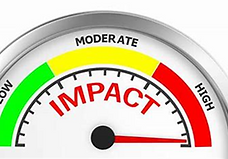
3.Impact Assessment
Classification:
-Assign collected inventory data to relevant environmental impact categories (e.g., global warming potential, acidification, eutrophication).
Characterisation:
- Quantify the impact of each input and output. For example,
convert greenhouse gas emissions into CO2 equivalents.
Normalisation:
- Optional step to compare results with a reference system or to
facilitate comparison between different impact categories.
Weighting:
- Optional step to prioritise certain impact categories over others
based on their perceived importance.

4.Interpretation
Analysis:
- Analyse the results to understand the significant environmental
impacts throughout the product’s lifecycle.
Conclusions:
- Draw conclusions based on the findings and identify areas for
improvement.
Recommendations:
- Provide actionable recommendations to reduce the product’s
environmental impact.

5. Reporting and Review
Documentation:
- Document the LCA process, data, assumptions and results
thoroughly.
Critical Review:
- Conduct a critical review of the LCA to ensure it is
scientifically sound and meets the goal and scope
Eco Friendly

The relationship between Life Cycle Assessment and the term Eco Friendly
During the complete Life Cycle Assessment you need to think of the different stages of the product is Eco Friendly
Eco friendly:
1. Discovery and development
2.Introduction
3.Usage
4.Scrapping
1.Discovery and development
Strategies to Minimise Environmental Load During Development
a.Low-Impact Materials:
- Choose materials with a lower environmental impact, considering factors
such as energy required for production, recyclability and toxicity.
b.Life Cycle Thinking:
- Holistic Approach: Consider the entire life cycle of the product during
the development phase to identify and mitigate environmental
impacts early.
c)Life Cycle Assessment (LCA):
- Conduct an LCA to understand the potential environmental impacts
and make informed decisions to reduce the overall footprint.
2.Introduction
- Comercial material
- Travel to promote sales
-
-
3.Usage
- Energy consumption during use of the product
- Maintenance of the product
4.Scrapping
a)Design for Disassembly
Modular Design:
- Create products with modular components that can be
easily separated and recycled.
Standardised Fasteners:
- Use standardised screws and fasteners to simplify
disassembly
b.Material Selection
- Recycled Materials: Use materials that have high recycling rates
and can be reprocessed multiple times without degradation.
- Non-Toxic Materials: Avoid using toxic substances that
complicate the recycling process and pose environmental risks.
Presentation of Environment. The corresponding PPP is for sale.
Reference
Menues


Main Menu
Building Block Menu

Training Menu


Assessment Menu

Company Philosophy Menu
Coaching Menu


Workshop Menu

SPOTLIGHT / Focus on Heart and Mind menu


A Human Centered Organisation
Core Human Values
Moral Ambition