
30-04-2026
Beeing a leader or a coworker is a constant cooperation / balancing act with others
In my experience one of the more important areas to address is the balance between feeling and logic,
in my vocabulary Heart and Mind
Heart and Mind Management provides Assessment, Coaching, Training, Workshops supporting in management and organisation effectiveness
We updated the homepage on 30-04-2026
I have recorded spoken presentations on the following subjects and launched them, and also updated the homepage

Model

Running a company or an organisation can be compared to Archery you need to stand on a solid ground, everything needs to work well together and in both cases you go for meeting your targets

Model
The Modle
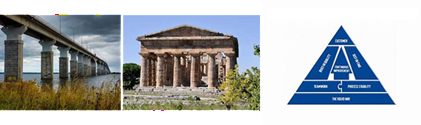
If you look at different models used by different companies they have some principles in common:
- The company is looked upon as a unit meaning that the model mirrors
the whole company, that everything needs to work together and focus
is put on the things not working
- A bridge on pillars, where all the pillars need to be there to
successfully carry the road
- A temple where all the pillars are needed to support the roof
- A triangle where all the parts work together to support the
customer
- All of them have the customer on top and in focus
- All of them have the values as a foundation
What are the common principles of different quality models?
1. Customer focus
2. Continuous improvement
3. Leadership & commitment
4. Process approach
5. Evidence-based decisions
6. Employee involvement
7. Relationship management
Most quality models focus on customers, continuous improvement, structured processes, and involving people across the organization.

The model I am using
- My take on this is that the company is a unitwhere everything needs to work
together
- Change and values (the human)
- Synchronisation and Timing (the string)
- Teamwork and Individuals (the bow)
- Process (the arrow)
- Customer Expectation (the angel)
- Quality (the foundation)
- I have the customer (as the target)

The Human
Brain and Gut Feeling => Change and Values

The brain => Change Management and Adjustment (2)
- Operational Development
- Problem Solving Methodologies
- Innovation Management
Gut feeling => Values (3)
- Quality Culture
- Leadership
- Self Leadership
The numbers in brackets refer to the common principles

The string =>Synchronisation and Timing (5,7)
- Project Portfolio Management
- Development
- Waterfall Project
- Iterative development
- Diversified Development
- Service/Fault tree
- Ensured start of production
The bow => Teamwork and Individuals (6)
- Organisational Design
- Resource Flexibility
- Competence Management
- Goal Oriented Team
- Cross-Functional Work
The arrow => Process (4)
- Process Simplicity
- Extended Value chain
- Knowledge
The numbers in brackets refer to the common principles
Customer

The Target board => Customer Expectation (1)
- Customer needs
- Targets
The numbers in brackets refer to the common principles

The Foundation => Quality (5)
Quality Culture
Quality culture means that everyone in the organisation cares about quality and works to maintain and improve it. It is not just about rules—it is about mindset and behavior.

The importent components of Quality Cuture are:
1.Leadership Commitment
2.Clear values and standards
3.Employee Involvement
4.Continuous Improvement
5.Customer Focus
6.Clear Communication
7.Training and Development
8.Accountability
Quality Culture consists of leadership support, shared responsibility, continuous improvement, clear standards, open communication, and customer focus.


Generally one has three tasks in an organisation
- THE ACTUAL JOB
- Ensure that what you deliver is with quality (use adequate
improvement and quality tools)
- Improving the actual job

Is an environment where team members always care for the quality of their work and when needed take corrective actions to ensure that the agreed quality is always reached
Things to bear in mind when establishing a Quality Culture:
1.Establish a system that promotes Quality Culture
2.Lead by example
3.Make sure that customers are in focus by everyone
4.Design quality from the start by e.g. using incremental development
5.Always use Improvement tools
6.Monitor what bad quality costs
7.Try to achieve an organisation where crises are prevented and the prevention is
rewarded (you tend to take risky and costly decisions in crises)
8.Full ownership of quality by everyone (everyone has a customer even if
not all are in direct contact with the end customer)
9.Use cross functional teams to benefit from all knowledge in your
company
10.Everyone is respected and knowledge from different persons is taken
into acount when a decision is taken
11.Where openness and vulnerability mean that it is okay for everyone to
not know everything, and this fact can be admitted and accepted.
Self Leadership

- What are the advantages of self-steering?
- How does the manager need to change behaviour
- What are the ways for the individuals to act in a self-steering team?
- Everyone needs:
- How do the Self Stearing influence the organistion
- Develop yourself

What are the advantages of self-steering?
1.Higher motivation
2.Faster decisions
3.More innovation
4.Stronger accountability
5.Better teamwork
6.Increased flexibility
7.Personal development
Self-steering increases motivation, responsibility, flexibility, and innovation because people are trusted to manage their own work.

How does the manager need to change behaviour working with a Self-Steering team
1.become more of a coach than a boss
2.focus on direction, not control
3.must build trust
4.need strong communication skills
5.handle conflicts differently
6.focus more on culture
7.develop emotional intelligence
Self-steering changes you from a controller to a facilitator and coach. You lead through trust, support, and clear direction instead of direct supervision.

What are the ways for the individuals to act in a self-steering team?
1.Take responsibility
2.Communicate openly
3.Support your teammates
4.Give and receive feedback
5.Stay accountable
6.Be flexible
7.Focus on team goals
In a self-steering team, you act responsibly, communicate clearly, support others, and focus on shared goals.
Everyone needs:
1.Self-awareness
2.Goal Setting
3.Self-motivation
4.Self-discipline
5.Taking Responsibility
6.Decision-Making
7.Time Management
8.Continuous Learning
9.Mindset and Attitude
10.Influence and Inspire Others


This way of steering means that the coworker her/himself steers the daily work and knows what needs to be done. Consequently there are fewer managers needed in the organisation. The coworker takes a bigger responsibility for what needs to be done and makes sure that it gets done
To achieve this
- The targets must be communicated and understood by
everyone in the organisation.
- Measurement and feedback on the work performed to everyone.
- To have a transparent and honest relationship between
manager and coworker.
- Everyone is a leader in his or her life. It is up to you and no one
else to create the working experience that you want to have. To
have the entire responsibility gives you the power in your life, it
is entirely up to you
- You are responsible to be and keep being engaged
- Together we stand tall, alone we fall. Teach to ask for help when
needed, and give help to others when they ask
- Work with and improve your superpowers (the things you have
defined as your superpowers)
- Your achievements are important but how you treat your
colleagues is as important (it is the total output from your group
that really counts)
What do you need to know to work in a self-steering team
- The target of the change you are responsible for
- The adequate quality tools to be able to ensure the change
To develop yourself into working with Self-Leadership
You need to decide
- What to do
- Why do it
- How to do it

1.Self Awareness and self-knowledge (what drives you?)
2.Identify desired experiences
3.Think and Decide in a constructive way (be relaxed when you think)
4.Planning and Target setting (SMART Specific, Measurable, Achievable, Relevant, Time limited Targets)
5.Optimise the motivation (adjust the target so it becomes more motivating)
6.Use the eco system (to proactivly seek support for our way to identify Targets based on the social, organisational, political and the fysical environment we act in)
7.Improve performance (push yourself for a shorter period of time, coaching,visualisation)
8.Appreciate failures (since they can teach you something new)
Leadership

Leadership is the way you motivate a group of persons in order to achieve defined targets
- By the ability to inspire others
- By presenting ideas both own and others’
- By respecting and listening to the members of the group
- By giving directions
- By your and the coworkers mutual trust
- By creating an environment where everyone feels respected and trusted
- Soft Steering with Targets and Values
- High performing team
- Feel, Think and Act
- Inspire and let people take responsibility
- To be a leader means that you need to live in a constant balancing act
- Prioritise
- Everyone needs to feel safe (physical, emotional or psychological safety).
- Create and promote a positive climate where everyone feels safe, listened to,
trusted and seen
- The group has more brains then you - use the total brain resource
- To start a leadership

If we manipulate or steer in detail people will give you exactly what you pay for

If we inspire , let people take responsibility and make them feel appreciated they will give us more than we ask for

High performing team
As a leader you need to work with your coworkers to create High performing team i.e. a group of people with specific roles and complementary talents and skills, aligned with and committed to common targets, who consistently show high levels of cooperation and innovation. All this produce superior results.

Feel, Think and Act
Use both your feelings and your logic to decide the actions to take

To be a leader means that you need to live in a constant balancing act
There is no general balance between Heart and Mind, it needs to be found out depending on the need of the leader and of the group
It may vary depending on occasion and with time
The balance needs to be re-evaluated constantly
Prioritise

Time critical
As a leader there is often to much to do, then it is important to prioritise in a structured way
Depending on the importance and the hurry of an activity your responsive action needs to be different
Remember that the relation to coworkers and the your direct manager often fits in the action quadrant
Performance critical

Everyone needs to feel safe (physical, emotional or psychological safety).

Physical
By leveraging data analysis, providing relevant information and facilitating communication, a Safe Workplace can be created and maintained
Several key steps and considerations to create and maintain a physically safe workplace
1.Risk Assessment
2.Safety Training
3.Compliance Assistance (information and instruction display)
4.Incident Reporting
5.Emergency Preparedness
Continuous Improvement

Emotional or psychological safety
It is created through building trust in a working group and it involves a combination of actions, behaviours, and communication that demonstrate:
- Integrity
- Sincerity
- Reliability
- Consistency
- Commitment
- Competence
Here are some ways to create trust:
- Be honest and transparent
- Follow through on commitments
- Demonstrate competence
- Act with integrity
- Listen actively
- Respect others
- Be reliable
- Admit mistakes
- Maintain confidentiality
- Build relationships

Create and promote a positive climate where everyone feels safe, listened to, trusted and seen
– and positive feedback is used a lot
A happy and positive person feeling safe does a better job
Save the negative feedback to the improvement situation when you can look upon it as improvement possibilities
- Bring positive criticism in a group
- Negative criticism face-to-face

As a leader you need to work with your coworkers to create High performing team i.e. a group of people with specific roles and complementary talents and skills, aligned with and committed to common targets, who consistently show high levels of cooperation and innovation. All this produce superior results.
The group has more brains then you - use the total brain resource
In the Heart and Mind Management model there are many components that can help you beeing a good Leader

To start a leadership
Starting a new job is always challenging. In the case of starting a leadership it is quite overwhelming. In the PPP that you can buy there is some advice of where to start

Managers tasks
Important components in a leadership
Leadership topics
1. Self-Awareness
2. Clear Vision & Direction
3. Communication Skills
4. Emotional Intelligence
5. Integrity & Ethics
6. Decision-Making Ability
7. Accountability
8. Ability to Inspire & Motivate
9. Adaptability & Continuous Learning
10. Empowerment & Delegation
11. Credibility & Competence
To enhance leadership: build trust, communicate clearly, grow people, and keep learning


Help

Dependence of alcohol, pills, drugs, gaming and mental ill-health
The following needs to be done:
- Create a policy regarding these problems
- Inform coworkers of the policy
- Depending on the problems you face, you might need:
- Define dangerous use
- Investigation and assessment
- Motivational treatment
- Motivational talks
- Addiction treatment

Exhaustion/problems with the mental health, an increasing problem in society
Sometimes the this is caused by performance based self esteem
•You often compare yourself to others
•You value yourself according to your achievements.
•You don’t allow yourself not to achieve the best all the time
•You don’t rest even if you are tired
You feel useless if you fail with a task

Solution focused conversations
is an approach to communication and problem-solving that focuses on identifying and implementing solutions rather than dwelling on problems.
1.Together create a preferred picture of how the coworker wants the future
to look like.
2.Strengths and Resources: Discuss together things that the coworker does
already today and works well.
3.Positive Language: What is working well today? Don’t focus on the
problems
4.Goal Setting: Setting clear and achivable targets together so that
individuals can work towards positive outcomes
5.Small Steps and Progress: Breaking down larger challenges into smaller,
more manageable steps, celebrating and acknowledging even small
progress is encouraged to build momentum.
6.Collaboration: Between the coaching person and the coach
7.Acceptance: Are you understanding and accepting the problem?
8.Brief and Time-Limited: The goal is to bring about positive change in a
relatively short period.
The International Journal of Solution Focused Brief Practices” an open source. link:

Dependence - ask for help
When different kinds of dependencies occur, don’t be afraid to ask experts for advice. It is important that leaders are involved, but there might be someone that can support or assist you in your role as a leader
Tips concerning leadership
Impotent in a leadership are to:
- To listen
- See for yourself
- Reflect
- Respect
- Communicate
- Be Clear
- Cooperate
- Be there when you are needed
- Support
- Act as a Sounding Board
- Change improve and develop
- Flow
- Be flexibel
- Vision & Direction
- Credibility & Competence
- Accountability


Leading in an AI environment
Before, leaders were expected to have answers.
With AI, strong leaders focus more on framing the right questions, checking assumptions, and interpreting results
1.More data-driven, less gut-only
- balancing data with human judgment
2. Faster decisions, shorter cycle
AI speeds up analysis so that:
- decisions are made quicker
- adjust strategies are done more often
- lead in real time, not yearly plans
That means being more agile and comfortable with change.
3. Stronger focus on ethics and responsibility
- setting ethical boundaries
- ensuring accountability
- protecting human values
4. Stronger focus on ethics and responsibility
- setting ethical boundaries
- ensuring accountability
- protecting human values
5. Skills become more important
- Judging wether information is trustworthy
- Communication skills
- Emotional intelligence

Core Human Values
As a Leader and as a coworker you need to act according to the Core Human Values
1. Respect
2. Empathy
3. Integrity
4. Kindness
5. Responsibility
6. Equality
7. Gratitude
8. Courage
9. Humility
10. Compassion


Artificial Intelligence


To think of when using AI

There are some important things to keep in mind so you use it safely, ethically, and effectively.
1.Accuracy
2.Privacy
3.Bias & fairness
4.Transparency
5.Responsibility
6.Safety & misuse
7.Copyright & ownership
8.Use it as a tool
Use AI like a smart assistant — helpful, fast, but not always right and not responsible for your decisions.
Types of AI


We are in the beginning of the Artificial Intelligence Development
So I am quite sure this will evolve


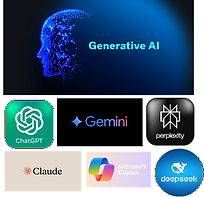
Generative AI = AI that can create new content
Pre-trained models (most common)
- They are trained on large amounts of data in advance
- They do not actively search the internet when you ask a question
- They respond based on what they have already learned
AI with search functionality (retrieval / browsing)
- These can retrieve up-to-date information from the internet in real time
- They use something called retrieval-based AI or web search
Built using techniques from Machine Learning and Natural Language Processing.
How it works:
1.Learns patterns from massive amounts of text
2.Predicts the next word in a sentence
3.Generates answers dynamically
Strengths:
1.Explains things clearly
2.Can write, summarise, translate
3.Handles complex, open-ended questions
4.Feels like a conversation
Weaknesses:
1.Can “hallucinate” (make things up)
2.Doesn’t always know what’s true vs likely
3.May be outdated or inconsistent
It is a very smart writer that sounds right but isn’t always guaranteed to be right.
Products:
ChatGPT
Google Gemini
Claude
Microsoft Copilot
Perplexity AI
DeepSeak

Analytical AI = analyses data
What it means
- It relies on stored, organized information (like tables, records, or knowledge
bases)
- The facts are usually verified and curated
- It retrieves exact data rather than “guessing” from patterns
Fact-database AI (retrieval-based AI)
More like a smart search system connected to real data.
How it works:
Pulls information from:
Databases
Documents
Verified sources
Often shows references or citations
Strengths:
More accurate for factual queries
Uses up-to-date or controlled data
Easier to verify information
Weaknesses:
Less flexible in conversation
Struggles with creative or complex explanations
Depends heavily on the quality of its data sources
A precise librarian that gives you real sources but doesn’t “think” creatively.

When not to use Artificial Intelligence (AI)
1. When human judgement is critical
- Ethical decisions
- Life-changing choices (medical, legal, disciplina)
- AI can support, but humans must decide.
2. When empathy and emotional understanding matter
- Conflict resolution
- Counseling or therapy
- Sensitive feedback (layoffs, personal crises)
AI can’t genuinely understand emotions or build trust.
3. When data is poor, biased, or missing
- Small datasets
- Biased historical data
- New or unique situations
- In new innovations
Bad data → bad AI decisions.
4. When transparency is required
- Legal decisions
- Government or regulatory contexts
- High-risk accountability situations
If you can’t explain why a decision was made, AI may not be appropriate.
5. When creativity must be original or deeply human
- Core artistic vision
- Personal storytelling
- Cultural or moral expression
AI can help, but relying on it too much can reduce authenticity..
-
6. When privacy or security is at risk
- Sensitive personal data
- Confidential business information
- National security contexts
AI use here requires strict controls — or no use at all
7. When speed is less important than reflection
- Long-term strategy
- Value-based leadership decisions
- Complex social issues
Fast answers aren’t always the right ones.
Pays attention to details and avoids mistakes.
Regulations
- EU risk - based
- US - More business-friendly but less consistent
- China - strict & government controlled
- United Kingdom - light & sector based
- Canada - risk-based
- Japan - soft regulation
- South Korea - balanced approach

There’s no single global AI law — instead:
Some regions (like EU) regulate heavily
Others (like US, Japan) stay flexible
Some (like China) tightly control AI
The world is still figuring out the balance between innovation and safety
Planned are 4 workshops during April 2026
No cost for participating
No limit in numbers attending the meetings

Goal-Oriented Teams
11/05 2026
09.00-09.30
17.00-17.30

Process Simplicity.
18/05 2026
09.00-09.30
17.00-17.30
Menues


Main Menu
Building Block Menu

Training Menu


Assessment Menu
Coaching Menu
Company Philosophy Menu


Workshop Menu

SPOTLIGHT on Heart and Mind menu


A Human Centered Organisation
Core Human Values
Moral Ambition